

|
|

Page 2 of 3:
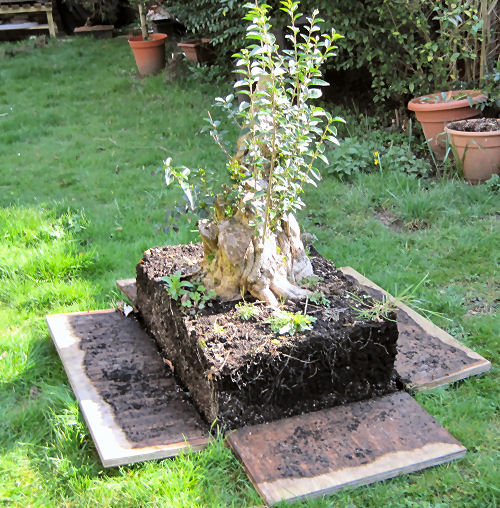
The first step of the repotting process was to unscrew the sides of the box so that I would have access to the roots.
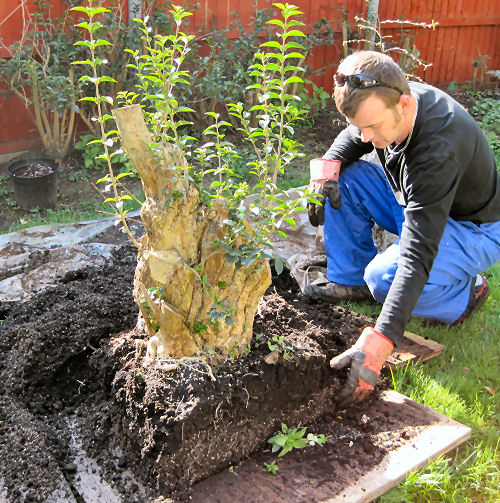
As the tree was so heavy it was still not possible to turn it on its side, even after removal of the sides of the box. So I started reducing the weight of the planting as a whole by removing the excess soil from around the edge of the rootball.
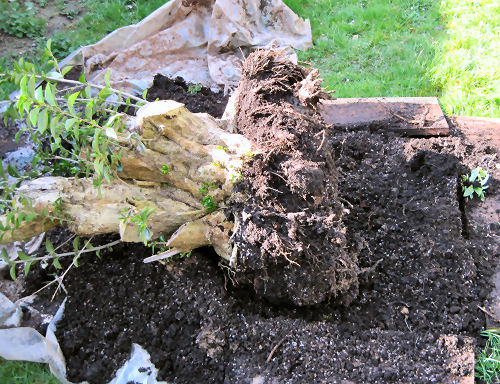
Eventually the tree was light enough to turn onto its side
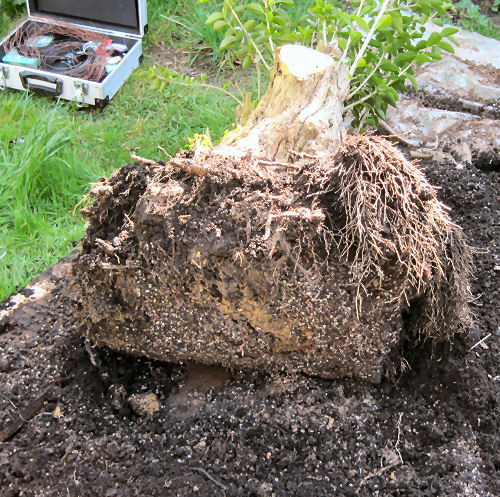
Though the tree had been planted in quite an 'open' organic mix consisting of compost and grit, the tree (understandably given its massive dimensions) had not previously been bare-rooted. This meant that the majority of the rootball was encased in thick, heavy London ground clay (from which they make the infamous London brick!). Not only is this clay incredibly heavy, it is also an extremely difficult medium for roots to grow in, particularly in a container.
I decided that for the long-term health and vigour of the tree, the best course of action would be to bare-root the tree, removing all traces of the ground-clay and replacing it with a lightweight inorganic soil mix.
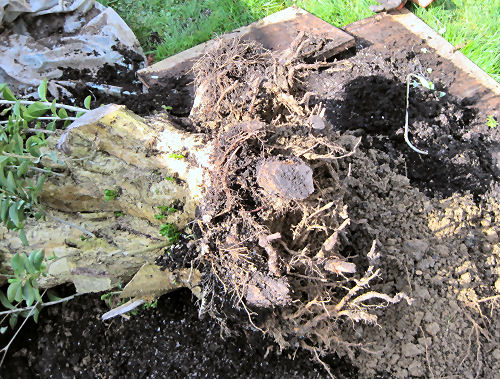
I started to remove the clay from around the roots. Ground-clay can become so compacted that its removal is a difficult job. Using a combination of chop sticks and my fingers (to try and avoid damaging the fine feeding roots within the rootball) the rootball of the Privet was revealed.
As I was able to inspect the rootball itself for the first time I was able to establish that there were many heavy roots (that would have grown previously deep into the ground) that were no longer any use to the tree and these could be removed to reduce the depth of the pot needed for the bonsai and as well as its weight.
Thick roots are only vessels through which moisture passes from the fine feeder roots into the trunk itself and removal of a thick root that carries no fine roots causes negligible harm to the health of the tree. My preference is to reduce the length of thick roots immediately after collection so that when the resulting wound has healed and issued feeder roots, additional stress is not necessary in the future when trying to fit the tree into the relatively shallow confines of a bonsai pot.